
The Values That Are a Phone Call
| Strip | Critical value | Patient action, then the call |
|---|---|---|
| 1 · Potassium | below 2.5 or above 6.5 mEq/L | ECG first, then call |
| 2 · Sodium | below 120 or above 160 mEq/L | Seizure precautions and neurologic check, then call |
| 3 · Glucose | below 50 or above 400 mg/dL | Assess level of consciousness, then call |
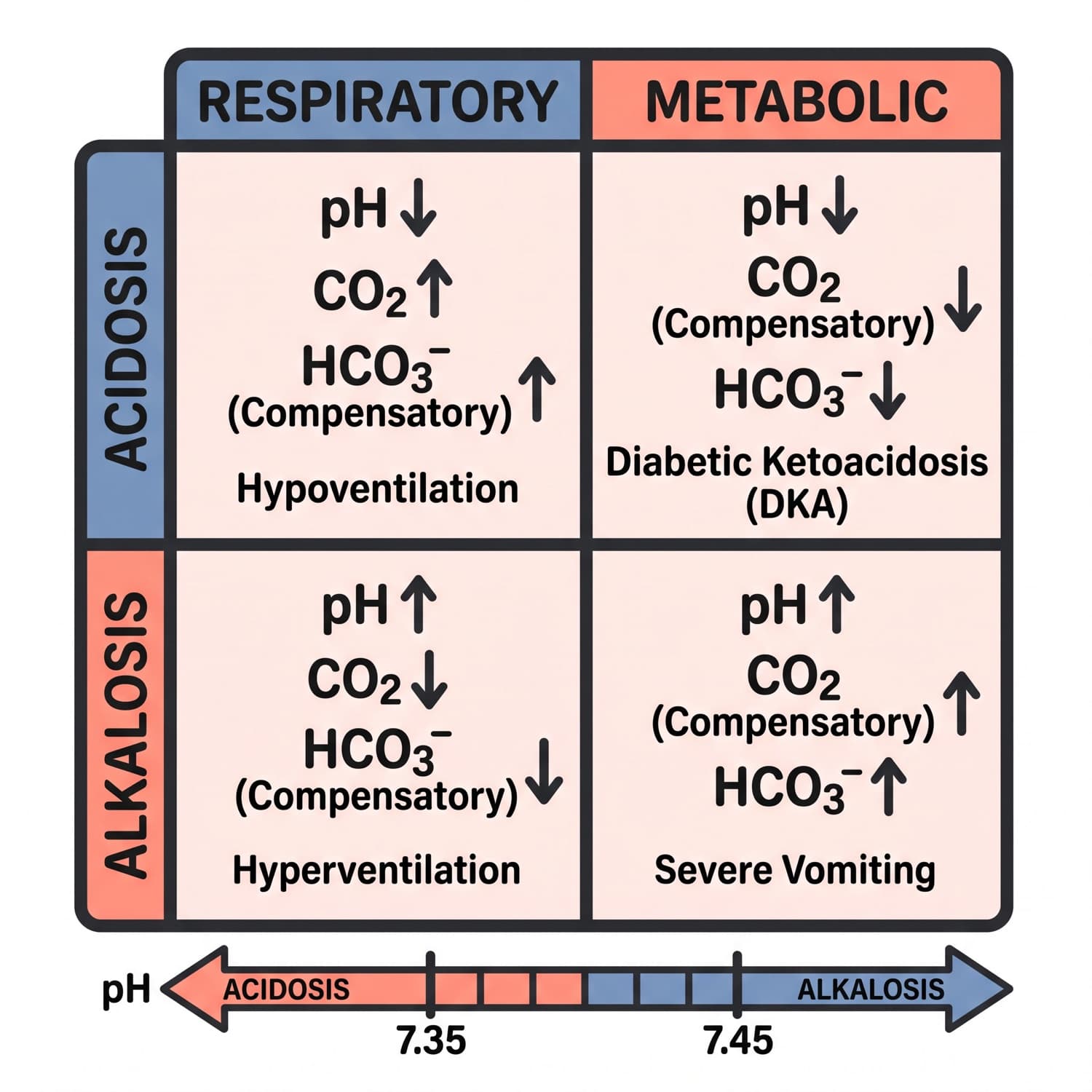
| 4 · The gas | pH below 7.20 or above 7.60; PaCO₂ below 20 or above 60 mm Hg; PaO₂ below 55 mm Hg | Airway and oxygenation, then call |
| 5 · Bleeding and clotting | platelets below 20,000/mm³; INR above 5.0; hemoglobin below 7 g/dL with symptoms | Stop invasive activity, hold the next anticoagulant dose pending orders, then call |
| 6 · Perfusion and marrow | lactate above 4 mmol/L; ANC below 500/mm³ | Reassess vital signs and precautions, then call |
The escalation sequence
- Verify the specimen belongs to this patient.
- Assess the patient before you read any more of the chart.
- Notify the provider.
- Read the value back to the provider and document the read-back with the time.
- Recheck as ordered, and note when the recheck is due.
Steps two and three never swap. Reporting a number you have not laid eyes on the patient for is how a nurse notifies a provider about a specimen instead of a person.
Margin notea critical value is a call, not a number.
Watch outreporting without assessing is the wrong answer even on an item where reporting is clearly required. If one option assesses and another notifies, and both are reasonable, the assessment goes first unless the patient is already unstable in front of you.
Memory hookVERIFY, ASSESS, NOTIFY, READ BACK, RECHECK. Five steps, and the first two are yours alone.
☐ I can say the escalation sequence out loud in order.
→ BOOK 09 · P8 and → BOOK 10 · P5 for the conditions behind these values. → BOOK 03 · P12 for the communication frame.
Takeawayassess the patient, then notify, then read back, and never reverse the first two.
Critical thresholds are set locally by each laboratory and vary between institutions. The values above are study standards. Follow local protocol.