
Book 13 · Page 44 / 15
Underneath the words: defense mechanisms and the technique that meets each one
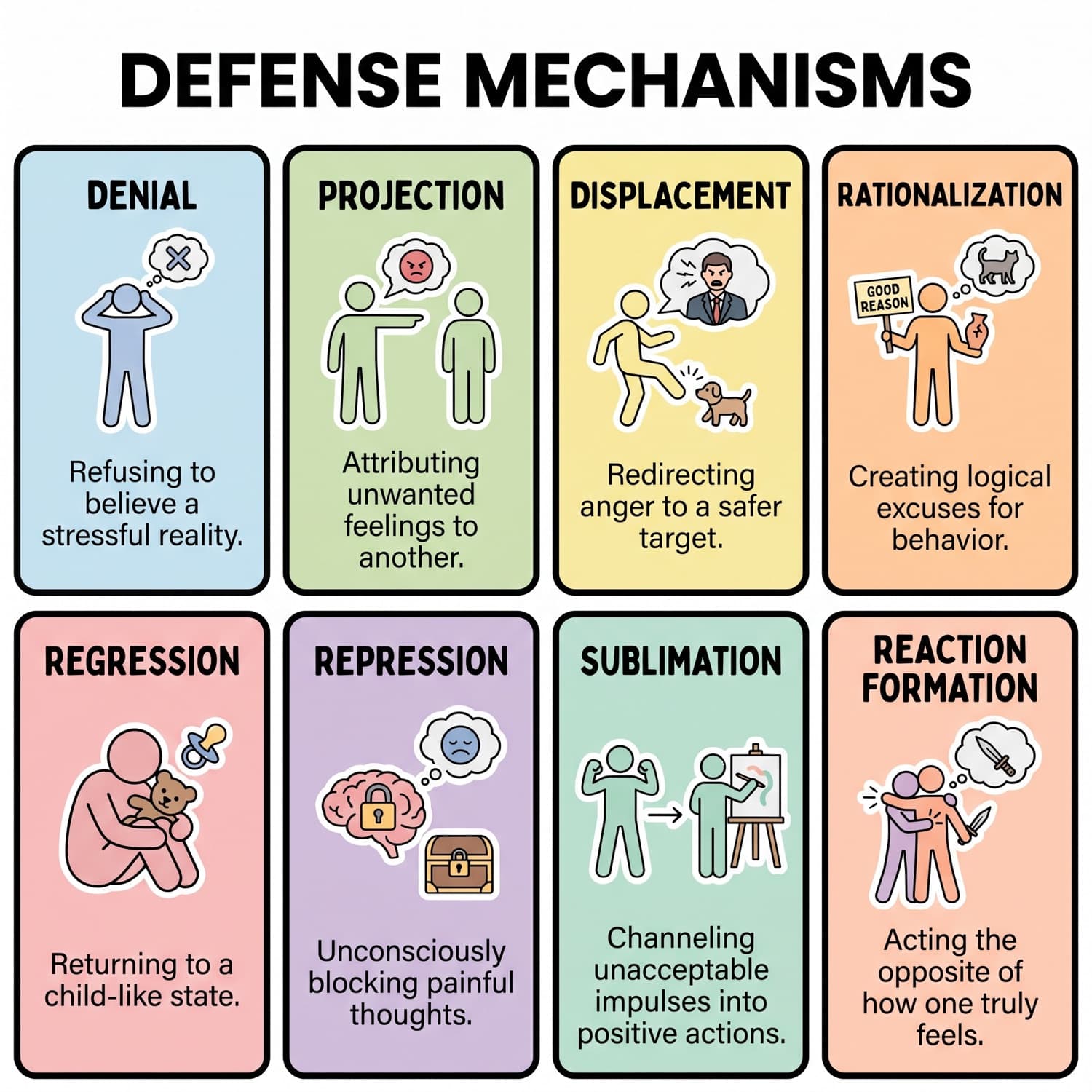
Why the defense is not a lie
A defense mechanism is an automatic way of managing anxiety. Most are adaptive in the short term and some are adaptive permanently. The exam rarely asks you to remove one. It asks you to identify it, and to choose a response that does not attack it.
The twelve the exam uses
- Denial — "The scan is wrong. I feel fine." Refuses the fact itself.
- Repression — "I don't remember anything about that night." Unconscious exclusion from awareness.
- Suppression — "I am not going to think about the biopsy until Friday." Deliberate and conscious postponement.
- Regression — a continent adult who begins wetting the bed and asking to be fed after admission.
- Projection — "I'm not angry. You are the one who is furious with me."
- Displacement — a man reprimanded by his provider who then shouts at the nursing assistant.
- Rationalization — "I only drink because of the hours I work."
- Intellectualization — "Statistically this tumor type has a 62 percent five-year survival," said without affect.
- Reaction formation — a patient who despises her roommate and behaves with elaborate sweetness toward her.
- Sublimation — a man with intense aggression who becomes a competitive boxer.
- Undoing — a patient who insults his wife and then buys her flowers within the hour.
- Splitting — "You are the only nurse here who cares. The day shift is cruel."
Meeting the defense
- Denial and rationalization: make an observation and stay factual. "You have told me the drinking is about your hours. I notice you have had three withdrawal admissions this year."
- Projection and displacement: reflect the feeling back to its owner without arguing about the target. "You sound angry right now."
- Splitting: one consistent team message and identical limits from every staff member. Correct it in report, not at the bedside.
- Regression: restate the expectation calmly and without shaming. "I will walk with you to the shower."
The trap
Confronting a defense head-on raises anxiety and produces escalation. The exam scores the response that lowers anxiety while keeping the topic alive.
Watch outsplitting is a staff problem before it is a patient problem. → BOOK 14 · P8
Margin notename it, don't fight it.
Takeawayidentify the mechanism, then answer the feeling underneath it, not the story on top of it.