
Rapid review I: mood, anxiety, trauma, and eating, with the cue and the first action
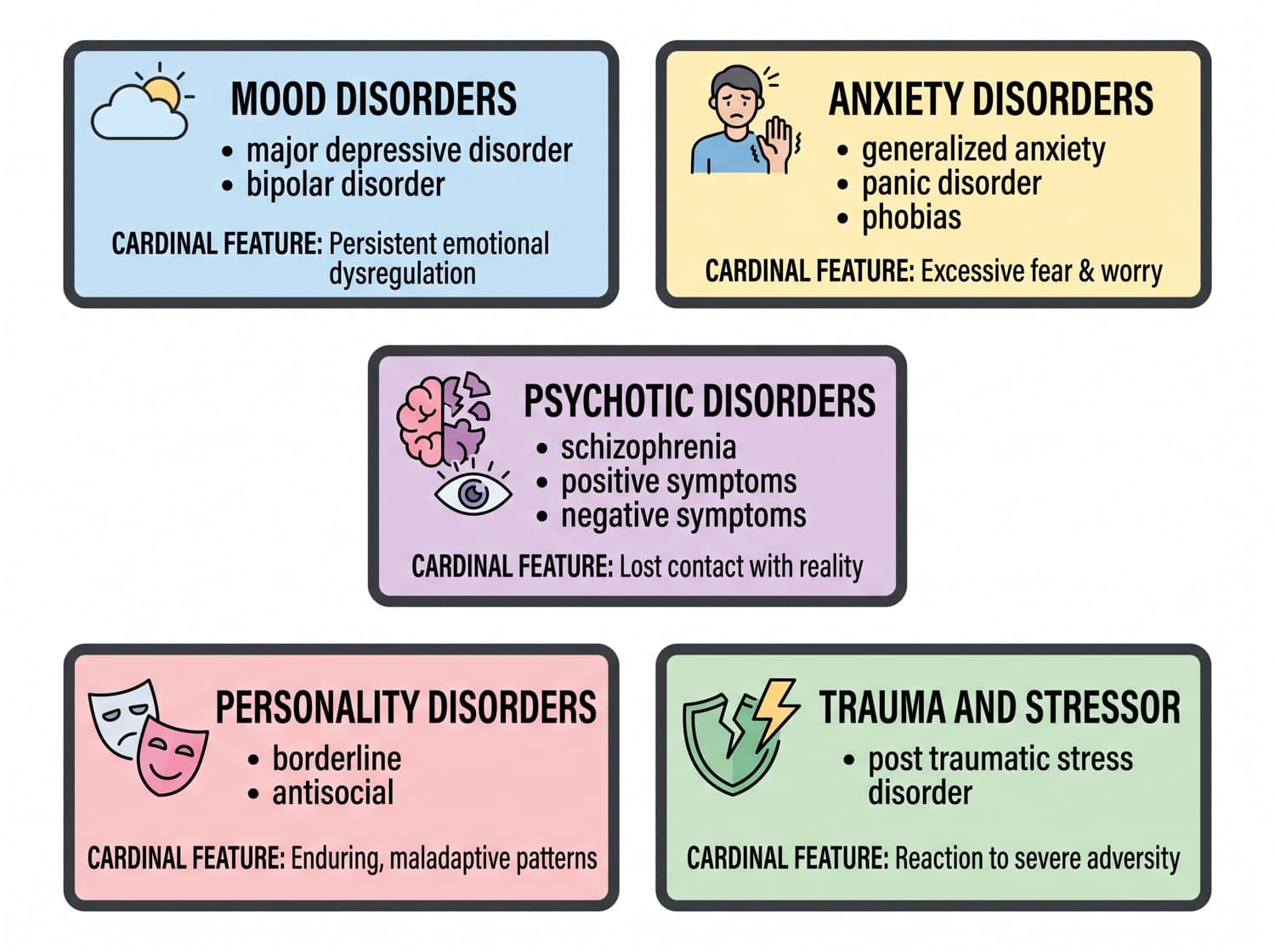
MAJOR DEPRESSIVE DISORDER — two weeks or more of depressed mood or anhedonia plus neurovegetative change: sleep, appetite, energy, concentration, psychomotor change, worthlessness. Hook: risk of suicide rises when energy returns before mood lifts, typically one to two weeks into an SSRI.
PERSISTENT DEPRESSIVE DISORDER — depressed mood most of the day, more days than not, for at least two years. Hook: lower intensity, longer runway, same suicide screening.
BIPOLAR I, ACUTE MANIA — grandiosity, pressured speech, flight of ideas, no sleep, spending, hypersexuality. The priority is physical: fluids, high-calorie finger foods the patient can carry while walking, a low-stimulation room, rest. Hook: nutrition and rest outrank insight.
BIPOLAR II AND HYPOMANIA — elevated mood without psychosis and without functional collapse. Hook: an antidepressant given alone can flip a patient into mania, so the mood stabilizer comes first.
ANTIDEPRESSANTS — SSRIs and SNRIs take four to six weeks for full mood effect and carry a boxed warning for increased suicidality in patients under 25. Tricyclics are anticholinergic and lethal in overdose through cardiac conduction. MAOIs require a tyramine-free diet and a two-week washout to or from an SSRI; aged cheese, cured meats, and draft beer risk hypertensive crisis. Bupropion lowers the seizure threshold. Hook: never stop an SSRI abruptly.
MOOD STABILIZERS — lithium levels rise when sodium or fluid falls, so vomiting, diarrhea, diuretics, a low-salt diet, and NSAIDs all push toward toxicity above 1.5 mEq/L. Early toxicity is coarse tremor, vomiting, diarrhea, and ataxia; late toxicity is confusion, seizure, and cardiovascular collapse. Valproate carries hepatotoxicity, pancreatitis, and neural tube risk. Lamotrigine is titrated slowly and any rash stops the drug. Carbamazepine causes hyponatremia and bone marrow suppression. Hook: teach consistent salt and water, not salt restriction. → BOOK 07 · P6
GENERALIZED ANXIETY AND PANIC — panic peaks in about ten minutes and mimics a cardiac event. Stay with the patient, speak in short simple sentences, keep the environment small and quiet. Hook: benzodiazepines work now, buspirone works in weeks, so buspirone is never a PRN.
OBSESSIVE-COMPULSIVE DISORDER — obsessions raise anxiety, compulsions lower it. Allow the ritual on admission, build time into the schedule for it, then set collaborative limits. Hook: interrupting a ritual abruptly escalates anxiety.
TRAUMA AND STRESSOR-RELATED — acute stress disorder runs three days to one month; beyond one month it is posttraumatic stress disorder. Hook: give the patient control over the pace and never require the narrative.
FEEDING AND EATING DISORDERS — anorexia nervosa brings bradycardia, hypotension, hypothermia, and amenorrhea; bulimia nervosa brings hypokalemia, dental erosion, and parotid swelling. Refeeding syndrome is the killer, driven by falling phosphorus. Hook: bupropion is contraindicated in eating disorders because of seizure risk.
ELECTROCONVULSIVE THERAPY — used for treatment-resistant depression, psychotic depression, catatonia, and acute suicidal risk when waiting weeks is unsafe. Informed consent is required and may be withdrawn at any time. Nothing by mouth beforehand, remove dentures and metal objects, give the anticholinergic to dry secretions, then the short-acting anesthetic and the muscle relaxant. Afterward, position on the side, monitor the airway, and reorient repeatedly. Confusion and short-term memory loss around the treatment period are expected and usually resolve.
Watch outrefeeding drops phosphorus within the first days of nutrition; monitor and advance intake slowly. Margin note: the mood lifts last.
Takeawayevery affective disorder has a physical priority before it has a psychological one.