
Perfusion logic
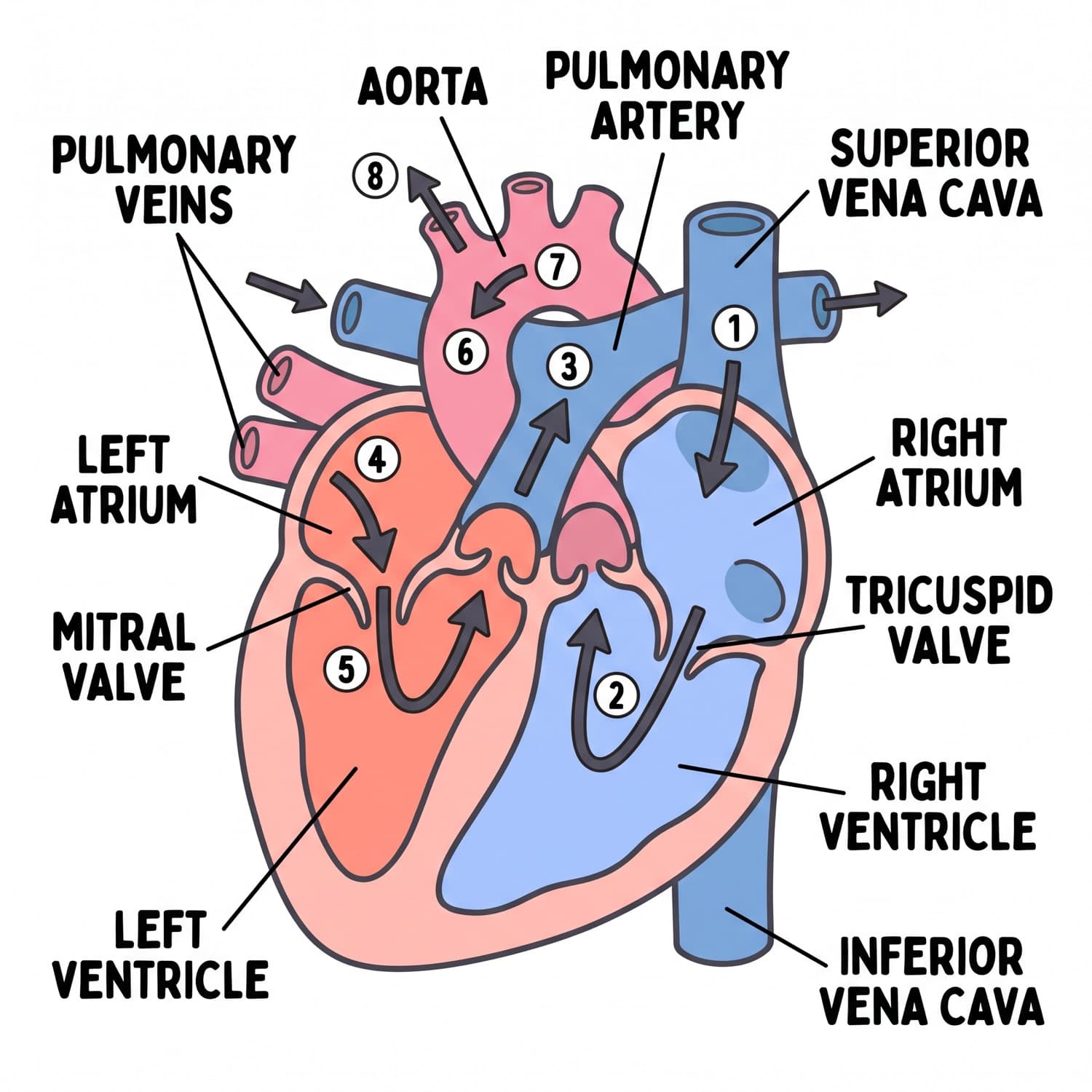
Cardiac output is heart rate multiplied by stroke volume. Stroke volume itself has three inputs: preload, or how full the ventricle is; contractility, or how hard it squeezes; and afterload, the resistance it must push against. Mean arterial pressure is that output driven against systemic vascular resistance. Every cardiac diagnosis the exam prints is one of those four dials moving in one direction. Blood pressure is the readout, not the disease.
What perfusion failure looks like first
- New confusion, restlessness, or anxiety. The brain complains before anything else does.
- Urine output falling below roughly half a milliliter per kilogram per hour.
- Cool, mottled, or dusky extremities with capillary refill that drags.
- A rising lactate, because tissue has switched to anaerobic metabolism.
- Thirst and a dry mucosal surface in the volume-depleted patient.
The narrowing pulse pressure
Pulse pressure is systolic minus diastolic. When systolic drifts down while diastolic holds or climbs, stroke volume is falling and vasoconstriction is compensating for it. A patient with a heart rate of 118 and a blood pressure of 104 over 88 is compensated, not stable. The exam builds trend items on exactly this pattern, and the candidate who waits for a systolic in the eighties has already missed the item.
The one decision
Facing a hypotensive cardiac patient, decide first whether the tank is empty or the pump is failing. Empty tank: flat neck veins, dry mucosa, a history of loss. Failing pump: distended neck veins, crackles, an S3, a history of infarction or cardiomyopathy. That fork determines whether the next order helps the patient or drowns them, and no amount of monitor-watching substitutes for making it.
Margin notethey test the number that has not changed yet.
Watch outa normal blood pressure in a tachycardic adult is compensation, not reassurance.
TakeawayBlood pressure falls last, so treat the failing input rather than the reading.
→ BOOK 08 · P4 for hemodynamic parameters · → BOOK 07 · P6 for the values · → P44 for shock