
The clinical judgment loop
What the loop is for
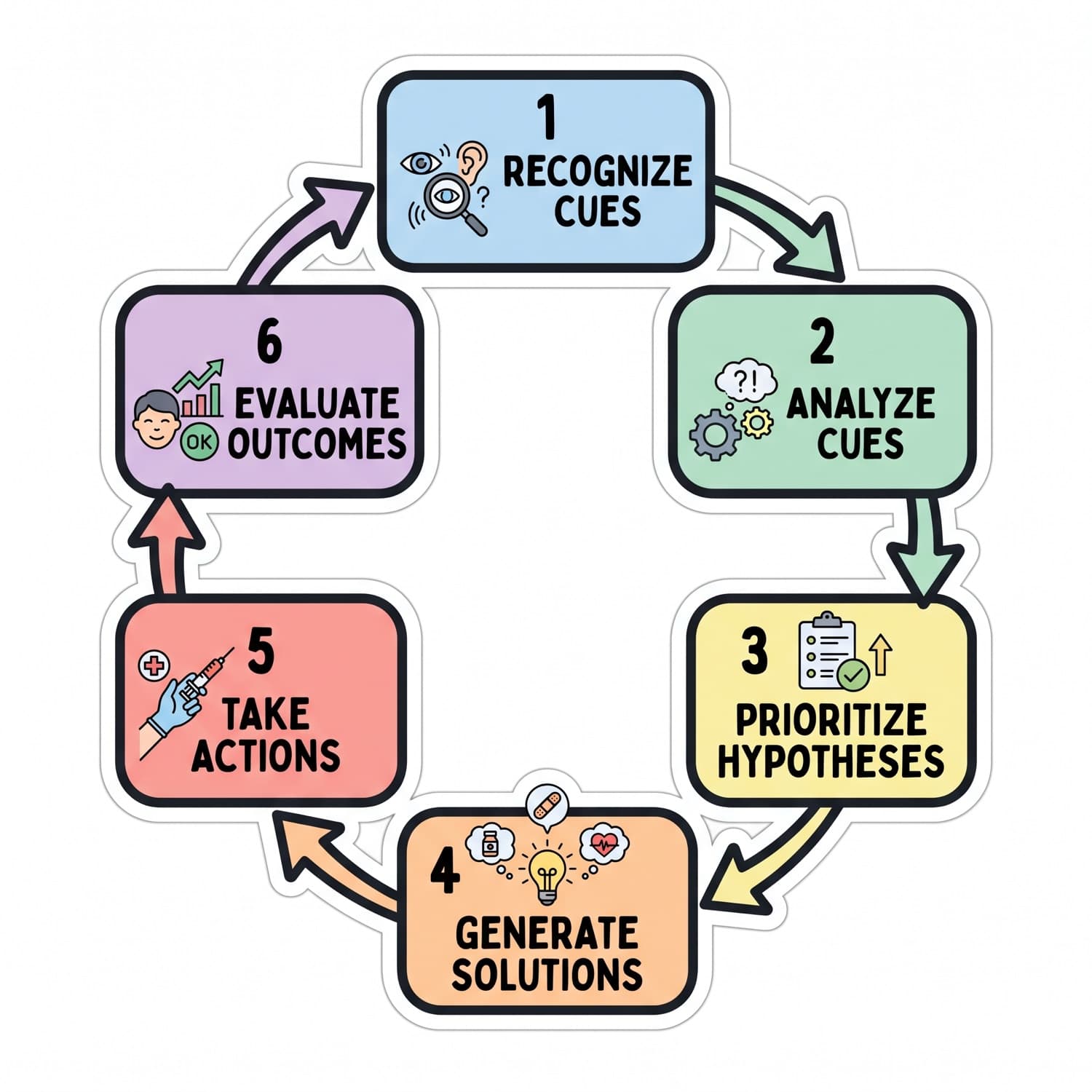
The model describes how a nurse moves from noticing something to confirming that the response worked. It is a shape, not a checklist. The exam writes items at individual steps rather than across the whole loop, so identifying which step a stem is asking you to perform is often more than half the work of answering it.
The six steps
CUE Recognize Cues → ANA Analyze Cues → PRI Prioritize Hypotheses → SOL Generate Solutions → ACT Take Action → EVA Evaluate Outcomes → back to CUE
The stem tells you the step
| The stem says | The step is |
|---|---|
| "which findings require follow-up" | CUE |
| "what is the client most likely experiencing" | ANA |
| "which condition is the priority" | PRI |
| "which interventions are indicated" | SOL |
| "what does the nurse do first" | ACT |
| "which finding indicates the treatment was effective" | EVA |
High-yield: Book 1 shows the loop once and works a single pass across pages 10 to 14. Layer-by-layer mechanics, cue-weighting logic, bowtie construction, and the full worked case library belong to Book 2. This page does not teach how the model was built.
Margin noteanswer the step you were asked, not the step you like.
Watch outLearn the step names in their published wording. Paraphrases drift, and a drifted name will not match the stem in front of you.
TakeawayEvery clinical item sits at one of six steps, and naming the step narrows the answer before you recall a single fact. → BOOK 02 · P3 · → BOOK 02 · P11