
One pressure, six red flags: portal hypertension
The pressure story
Scarring raises resistance across the liver. Portal blood, which normally runs at roughly 5 to 10 mmHg, backs up and finds collateral routes around the obstruction, and every one of those routes produces a finding at the bedside. Once the pressure gradient across the liver passes about 10 mmHg, varices form. Once it passes about 12 mmHg, they bleed. Stop memorizing cirrhosis as a symptom list. One pressure generates the list.
The six consequences of the pressure
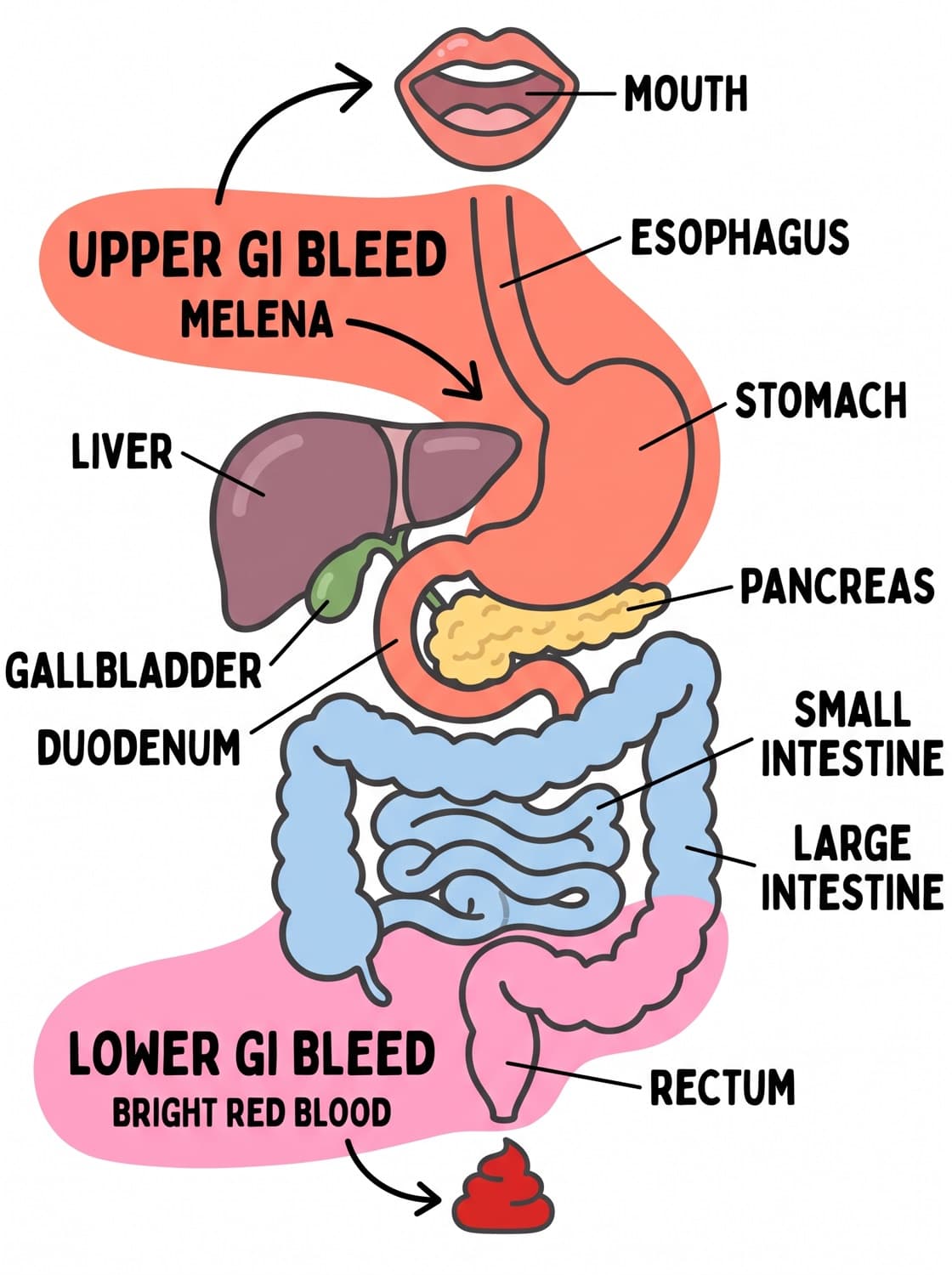
- Esophagogastric varices. Thin-walled collateral veins carrying portal blood. They bleed without warning and they bleed fast.
- Ascites. Portal pressure pushes fluid out, and low albumin fails to pull it back.
- Splenomegaly with platelet sequestration. The enlarged spleen holds platelets, so the count falls without any marrow problem.
- Portosystemic shunting. Blood bypasses the liver, so ammonia and other gut-derived toxins reach the brain unfiltered.
- Caput medusae and hemorrhoidal veins. Visible collaterals at the umbilicus and the rectum.
- Hepatorenal deterioration. Splanchnic pooling drops effective renal perfusion, and urine output falls.
What the liver stopped making
- Albumin, so fluid leaves the vessels and the edema and ascites worsen.
- Clotting factors, so the international normalized ratio climbs and the patient oozes from gums, punctures, and the nose.
- Conjugation capacity, so bilirubin rises and jaundice and pruritus follow.
The nursing that follows
- Daily weight and abdominal girth, same hour, same scale, same measuring point.
- Lactulose titrated to two or three soft stools each day, with rifaximin alongside. Protein is no longer routinely restricted, and holding protein to treat encephalopathy is an outdated instruction.
- Position upright for paracentesis with the bladder emptied first, then watch for hypotension after a large-volume tap.
- No aspirin, no nonsteroidal anti-inflammatory drugs, no straining at stool, no vigorous nose blowing.
Memory hookammonia rises when the shunt opens.
Watch outhematemesis in a cirrhotic patient is a bleeding varix until proven otherwise. It is not gastritis, and it is not the spicy dinner.
Takeawayone pressure explains six findings, and confusion in a cirrhotic is a neurologic emergency in slow motion.
Albumin, international normalized ratio, ammonia, and platelet values → BOOK 07 · P6. Beta blocker and octreotide class logic → BOOK 05 · P8.