
Seven lungs, seven sounds, seven first moves
☐ Asthma exacerbation Expiratory wheeze, prolonged expiratory phase, accessory muscle use, difficulty speaking in full sentences. Hook: A quiet chest in a struggling asthmatic is not improvement, it is impending arrest, because no air is moving well enough to make a sound. A carbon dioxide level that has normalized in a patient who was hyperventilating signals fatigue, not recovery. First move is to stay, call, and prepare to support ventilation.
☐ Chronic obstructive pulmonary disease exacerbation Diminished sounds throughout, prolonged expiration, barrel chest, and a change in sputum volume, color, or purulence. Hook: Controlled oxygen titrated to the patient's target band, bronchodilators, systemic steroids, and non-invasive ventilation when carbon dioxide is rising with acidemia. First move is to set the oxygen deliberately rather than generously.
☐ Pneumonia Crackles and bronchial breath sounds over one area, dullness to percussion, increased tactile fremitus, egophony. Hook: Draw cultures before antibiotics, but never let culture collection delay the antibiotic in a patient who is septic. First move is oxygen, cultures if they can be drawn immediately, and the antibiotic.
☐ Pulmonary embolism Often a clear chest with sudden dyspnea, pleuritic chest pain, tachycardia, anxiety, and hypoxemia out of proportion to the examination. Hook: The mismatch between a normal-sounding chest and a frightened, hypoxemic patient is the cue. First move is oxygen, position of comfort, and immediate escalation.
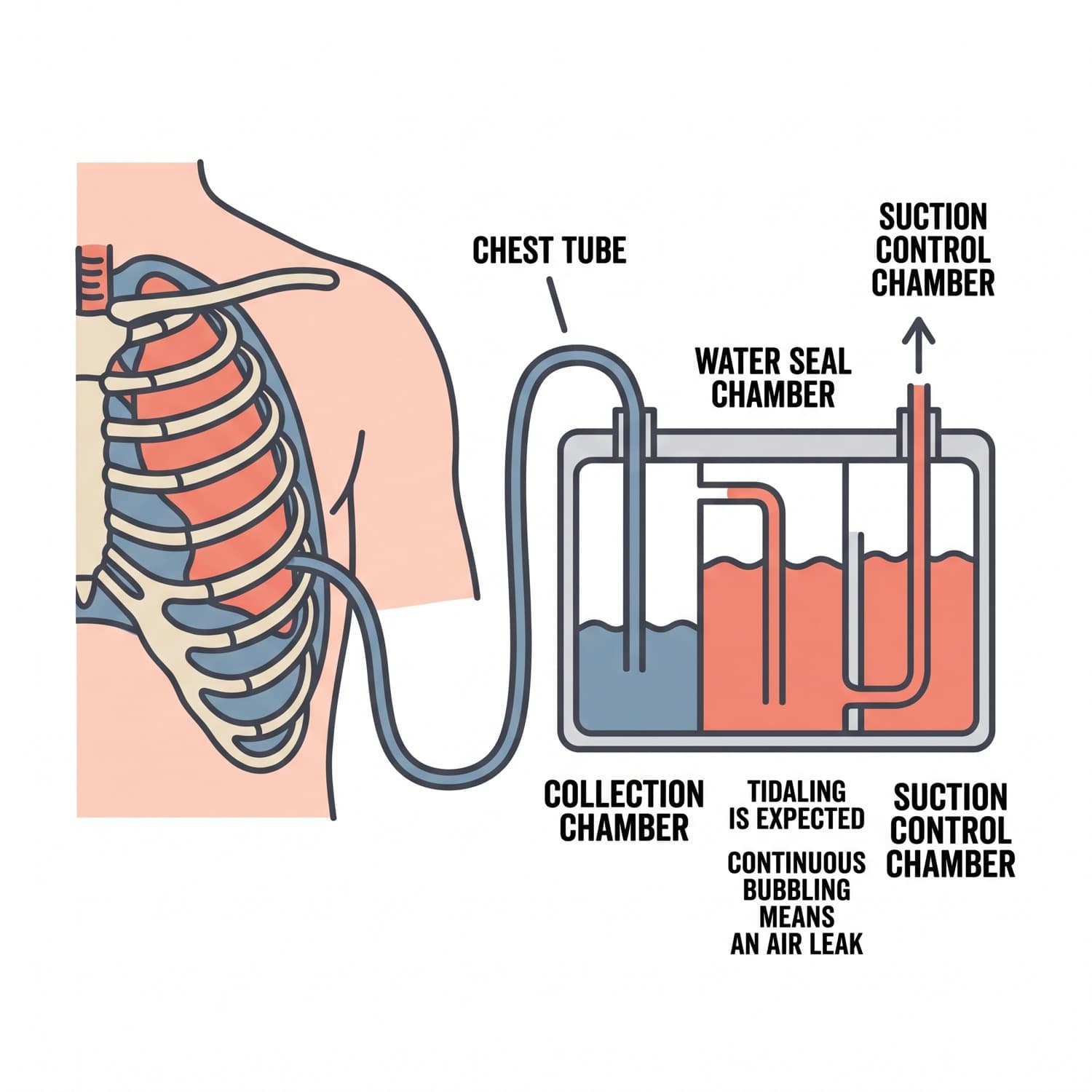
☐ Pneumothorax Absent or diminished sound on one side, hyperresonance to percussion, sudden sharp unilateral pain. Hook: Add hypotension, distended neck veins, tracheal deviation away from the affected side, and severe distress and it is a tension pneumothorax. Treat immediately. Do not wait for the film.
☐ Acute respiratory distress syndrome Diffuse crackles with hypoxemia that will not respond to a rising delivered oxygen percentage. Hook: Bilateral opacities that cardiac failure and fluid overload do not explain. First move is to stop climbing the percentage and escalate to pressure.
☐ Pulmonary edema Coarse crackles rising from the bases upward, pink frothy sputum, orthopnea, an audible extra heart sound. Hook: This one belongs to the heart. Distinguishing it from acute respiratory distress syndrome is why the cardiac history and the filling pressures matter: → BOOK 08 · P6.
Margin notesound plus side plus speed of onset equals the answer.
Auscultation sequence and technique is → BOOK 15 · P6. Anticoagulant pharmacology is → BOOK 05 · P6.
TakeawayWhere the sound is abnormal narrows the diagnosis faster than what the sound is called.