
Two Clocks: What the Child Understands, What the Child Fears
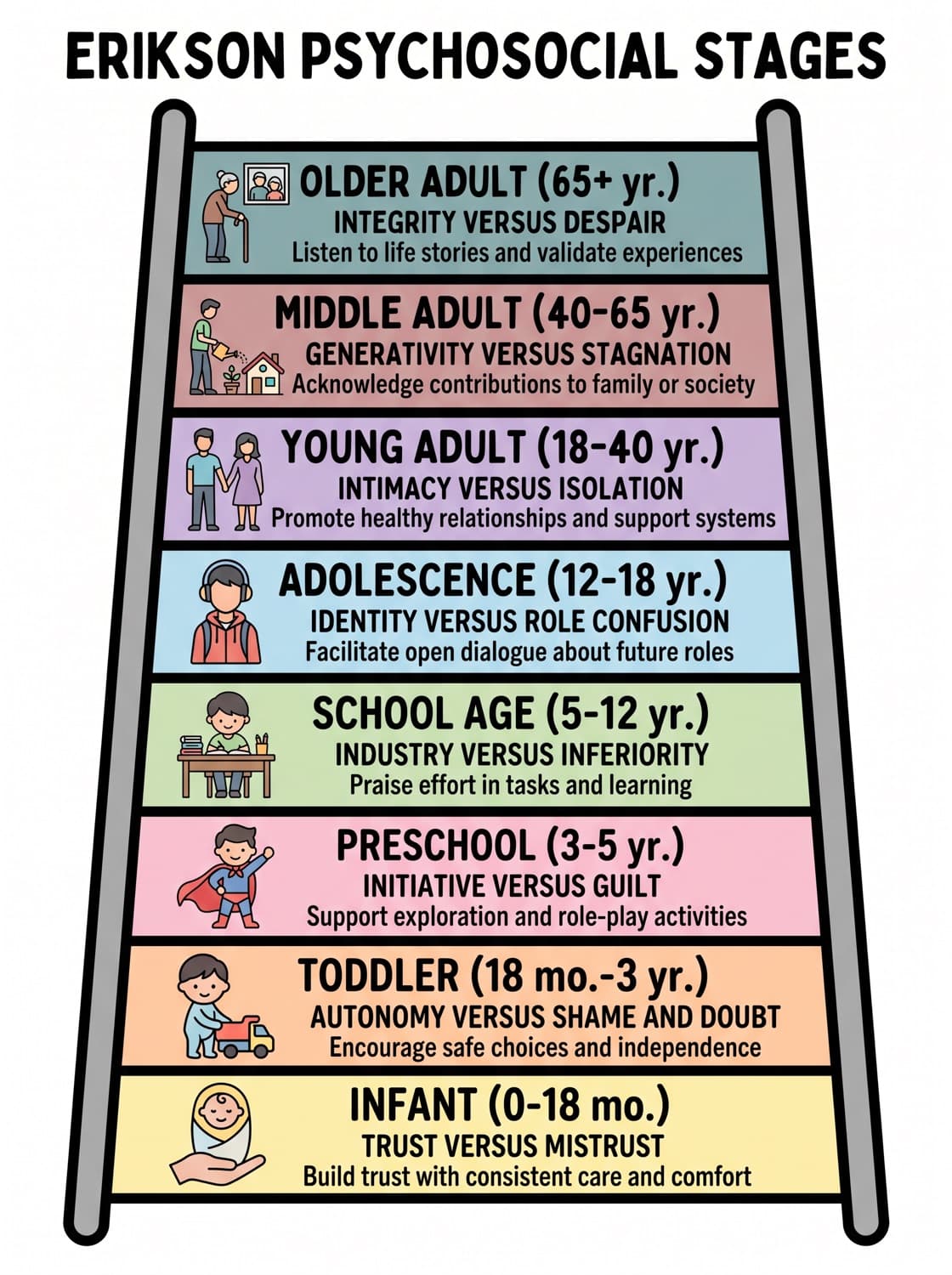
Two clocks run at once
Erikson names the emotional task the child is working on. Piaget names the machinery the child has to think with. Care fails when one clock is addressed and the other ignored. Explain surgery honestly to a four-year-old and the honesty is wasted, because a preoperational thinker converts "the doctor is going to fix your tummy" into a punishment for something they did. You have to answer both clocks in the same sentence.
| Infant, birth to 1 year | Toddler, 1 to 3 years | Preschool, 3 to 6 years | School-age, 6 to 12 years | Adolescent, 12 to 18 years | |
|---|---|---|---|---|---|
| Erikson | Trust vs mistrust | Autonomy vs shame and doubt | Initiative vs guilt | Industry vs inferiority | Identity vs role confusion |
| Piaget | Sensorimotor | Sensorimotor into preoperational | Preoperational, magical and literal | Concrete operational | Formal operational |
| Dominant fear | Separation, stranger anxiety | Separation from caregiver | Bodily harm, mutilation, intrusive procedures | Loss of control, loss of competence | Altered body image, peer rejection |
| Play | Solitary, sensory | Parallel | Associative, dramatic | Cooperative, collecting, rules | Peer group, competitive |
| Preparation lead time | Seconds; comfort is the preparation | Just before, one short sentence | Minutes before, with equipment to handle | Days before, with a diagram | Days to weeks, with shared decisions |
The sentence that changes
One intravenous start, four scripts.
- Toddler: caregiver holds the child. One short sentence immediately before. Nothing gained by warning earlier.
- Preschooler: let the child handle a catheter and the tape a few minutes ahead. Say what it will feel like. Say clearly that it is not a punishment and that they did nothing wrong. Use bandages generously; a preschooler believes the inside will leak out.
- School-age: explain days ahead with a simple diagram. Give the child a job, such as holding the tape or counting to three, because industry is the stage task.
- Adolescent: offer privacy, share the decision about site and timing, and ask directly whether they want the parent to stay.
Family-centered care
The caregiver is part of the unit of care, not a visitor. Keep them present if they wish to stay, use them as the comfort holder, and never as the restrainer. A child who is held down by a parent loses the one safe person in the room.
Memory hookTAIII for the Erikson sequence through adolescence — Trust, Autonomy, Initiative, Industry, Identity. Trust the infant, autonomy for the toddler, initiative for the preschooler, industry for the school-age child, identity for the adolescent. Three I's in a row, in alphabetical order after the first two letters.
Margin notepreschoolers hear "I'm going to take your blood" literally.
Takeawaythe stage sets both the fear being treated and how many minutes or days of warning the child is owed. → BOOK 14 · P6