
Stay with the feeling: the pattern behind every correct response
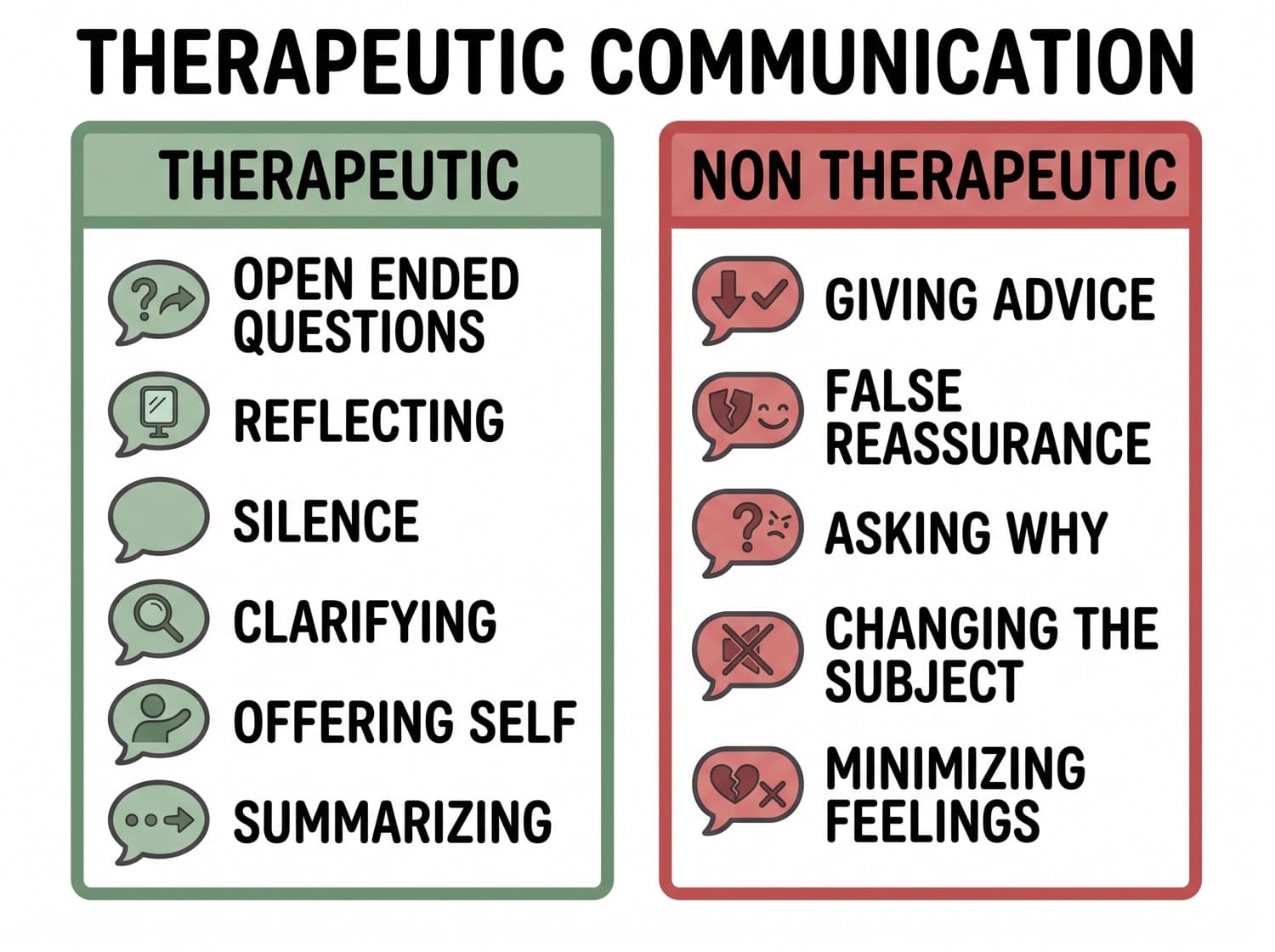
The rule
A correct response returns the patient's own feeling to the patient and invites more of it. It does not fix, soften, redirect, or interrogate. If a choice makes the nurse feel better, it is usually the distractor.
The four moves that are always wrong
- False reassurance. "You'll be fine." "Everyone feels this way after surgery." It closes the topic. The patient learns that this feeling is not welcome here, and the assessment you needed ends in one sentence.
- Advice. "What you should do is tell your husband." It takes the decision away from the person who has to live with it, and it makes the nurse responsible for an outcome that is not hers.
- The why-question. "Why do you feel that way?" It demands a defense. Patients who are anxious, psychotic, or grieving cannot supply a reason, so they supply a justification and stop talking about the feeling.
- The subject change. "Let's get you weighed first." Any pivot to a task, to the family, to the discharge plan, or to the nurse's own story abandons the cue the patient just handed you.
What stays open
- Reflecting — "You sound frightened." The patient hears the feeling named and either confirms it or corrects it, and either one is data.
- Restating — "You said you have not slept in three nights." The patient elaborates on the detail you repeated.
- Silence — say nothing and stay. The patient fills the space, usually with the part that matters.
- Open-ended invitation — "Tell me what happened next." The patient sets the direction.
- Making an observation — "I notice you have not eaten since yesterday." The patient explains the behavior without being accused of it.
- Offering self — "I will sit here with you." The patient is not alone with the feeling.
The one exception
When the content is a hallucination, a delusion, or a threat, present reality and address safety before exploring feeling. Say what you do and do not perceive, acknowledge that the experience is real to the patient, and never argue with the belief or agree that it is true.
Memory hook: STAY — See the feeling · Then reflect it · Ask open · Yield to silence.
Margin notethe nicest option is almost never the answer. → BOOK 01 · P21
Takeawaypick the response that keeps the patient talking about the feeling they just named.