
Where the gas actually stops: the alveolar-capillary unit
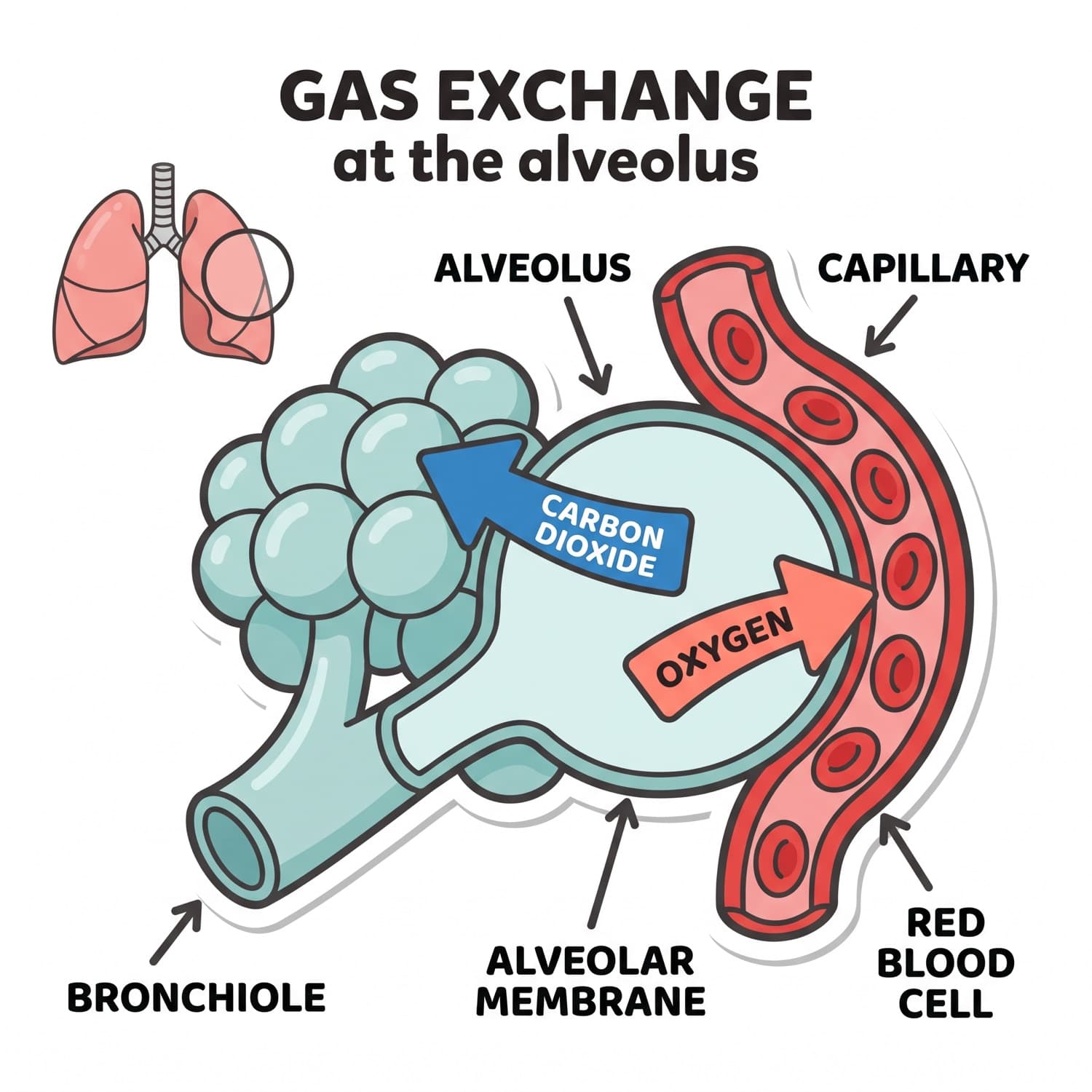
The unit
One alveolus. One capillary. A membrane thinner than tissue paper. Gas moves across it by pressure difference alone, with no pump and no active transport. Anything that blocks air from reaching the alveolus, blood from reaching the capillary, or molecules from crossing between them produces the same complaint from the patient and a different answer from the nurse.
Panel 1 · The four mechanisms of hypoxemia
- Hypoventilation. Air is not arriving. Carbon dioxide accumulates in the alveolus and displaces oxygen. The gas exchange surface is intact; the bellows are not working.
- Ventilation-perfusion mismatch. Air and blood both arrive, but in the wrong ratio to each other. This is the most common mechanism of hypoxemia in hospitalized adults.
- Shunt. Blood passes alveoli that hold no air at all, because they are filled, collapsed, or consolidated. Blood leaves the lung exactly as it entered.
- Diffusion limitation. The membrane itself is thickened or destroyed, so molecules cross too slowly at the time available.
Panel 2 · The one that does not respond to oxygen
Oxygen improves hypoventilation, improves mismatch, and improves diffusion defects, because in each of those the gas eventually reaches blood. Oxygen barely touches a true shunt, because shunted blood never meets the gas no matter how rich you make it. Refractory hypoxemia on a high delivered oxygen percentage is the fingerprint of shunt, and the answer is pressure and recruitment rather than a higher percentage.
Panel 3 · Acute respiratory distress syndrome is shunt with a name
- Acute onset, within one week of a known insult such as sepsis, aspiration, trauma, pancreatitis, or transfusion.
- Bilateral opacities on imaging that are not fully explained by effusion, collapse, or nodules.
- Hypoxemia that is not explained by cardiac failure or fluid overload.
- Care is low tidal volume ventilation, adequate positive end-expiratory pressure, a conservative fluid strategy once perfusion is restored, and prone positioning for moderate to severe disease.
Margin noteif more oxygen does nothing, the blood is skipping the air.
The fifth inset is the mirror image of shunt. In dead space the alveolus is open and full of air while the capillary is occluded, which is what a pulmonary embolism does. Air without blood, and blood without air, are the two ways one unit can fail. Distinguishing this picture from cardiogenic pulmonary edema is → BOOK 08 · P6, and any gas value belongs in → BOOK 07 · P4.
TakeawayRefractory hypoxemia means shunt, and shunt is treated with pressure.